# Funktionen und Graphen
## Funktionsgraphen
| Name | Funktionsgleichung | Graph |
| :---: | :---: | :---: |
| **Lineare Funktion** | f(x) = k ⋅ x + d | 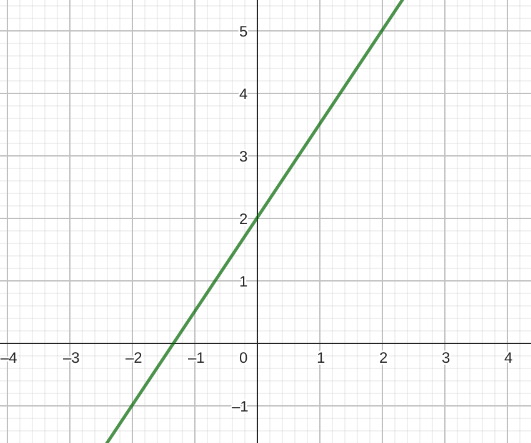 |
| **Quadratische Funktion** | f(x) = a ⋅ x2 + b ⋅ x + c|
|
| **Quadratische Funktion** | f(x) = a ⋅ x2 + b ⋅ x + c| 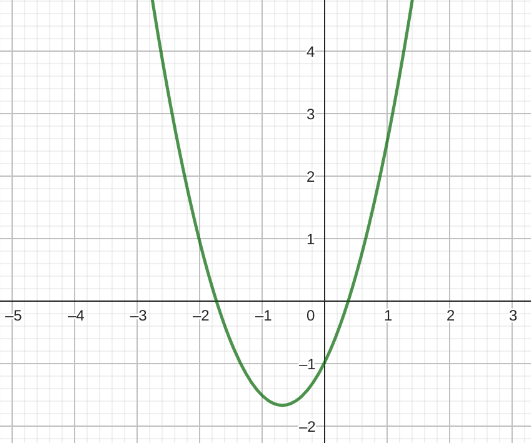 |
| **Exponentialfunktion** | f(x) = ax|
|
| **Exponentialfunktion** | f(x) = ax| 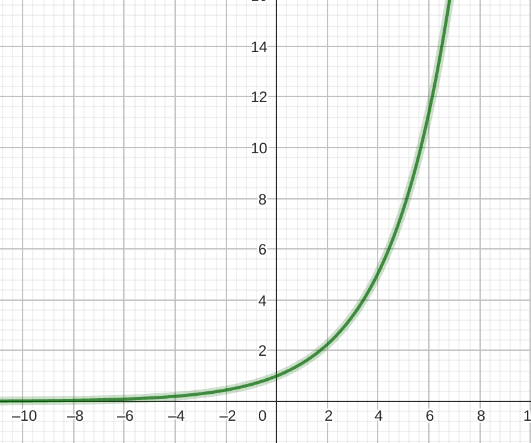 |
| **Logarithmusfunktion** | f(x) = logn(x) |
|
| **Logarithmusfunktion** | f(x) = logn(x) | 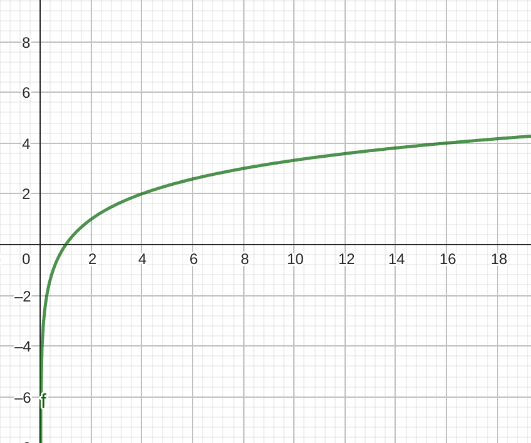 |
| **Potenzfunktion**
|
| **Potenzfunktion**
Falls n ungerade:
"S"-Form
Falls n gerade:
"W" oder "M"-Form| f(x) = a ⋅ xn | 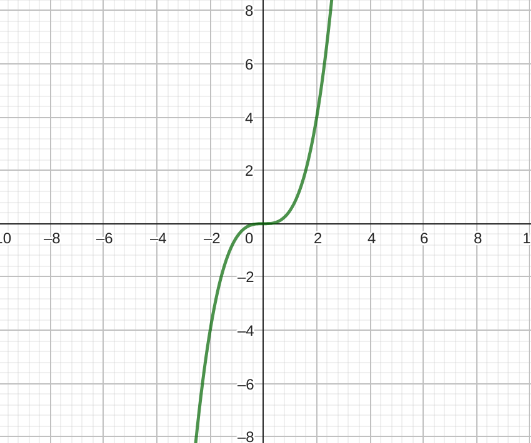 |
| **Polynomfunktion**
|
| **Polynomfunktion**
Wie bei Potenzfunktion:
Falls n gerade:
"W" oder "M"-Form
Falls n ungerade:
"S"-Form| f(x) = a0 ⋅ xn + a1 ⋅ xn-1+ ... + an ⋅ x0 | 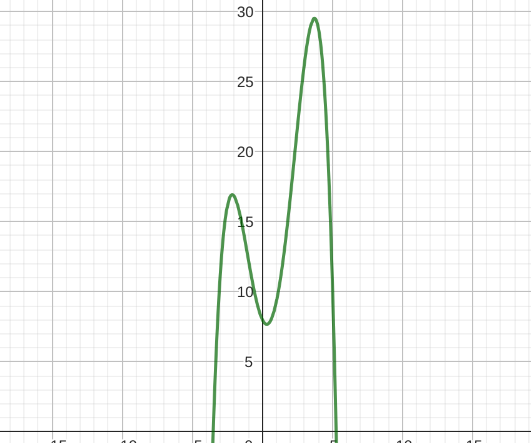 |
## Winkelfunktionen
### Sinus- und Cosinusfunktion
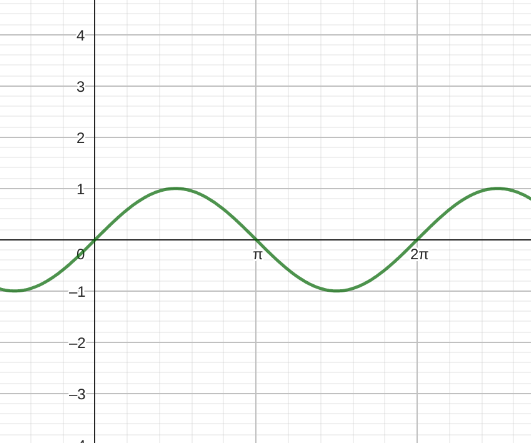
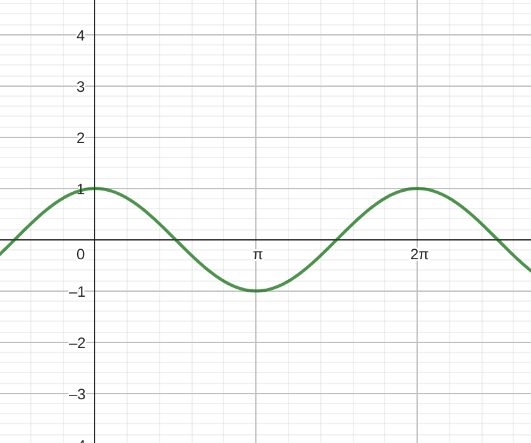
Winkelfunktionen sind Sinus-, Cosinus-, und Tangensfunktion. Diese sehen in der Grundfunktion (Amplitude = 1, keine Phasenverschiebung) folgendermaßen aus:
| Sinusfunktion | Cosinusfunktion | Tangensfunktion |
| :---: | :---: | :---: |
|
|
## Winkelfunktionen
### Sinus- und Cosinusfunktion
Winkelfunktionen sind Sinus-, Cosinus-, und Tangensfunktion. Diese sehen in der Grundfunktion (Amplitude = 1, keine Phasenverschiebung) folgendermaßen aus:
| Sinusfunktion | Cosinusfunktion | Tangensfunktion |
| :---: | :---: | :---: |
|  |
|  |
| 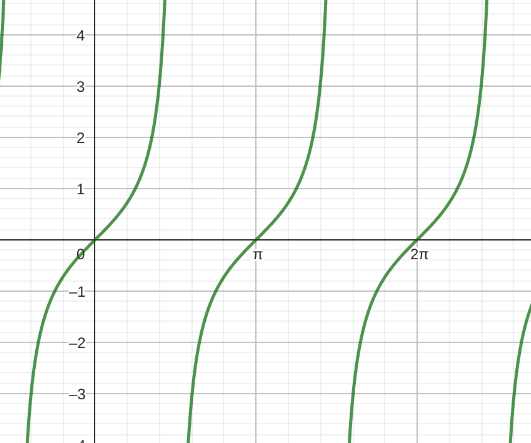 |
Wie man sieht, haben die Sinus- und Cosinusfunktion eine Periode von 2π und die Tangensfunktion eine Periode von π. Die Cosinusfunktion können wir auch als eine Phasenverschobene Sinusfunktion schreiben:
>**sin(x) = cos(x -
>)** bzw. **cos(x) = sin(x +
>)**
Wie wir sehen, wird die Sinusfunktion bei einer Phasenverschiebung von +
um
nach **links** verschoben, die Cosinusfunktion **bei negativer Phasenverschiebung nach rechts**. Die Sinusfunktion sieht allgemein so aus: **f(x) = a ⋅ sin(b ⋅ x + c)**. a ist die **Amplitude**, b die **Kreisfrequenz**, und c die **Phasenverschiebung**. b kann auch als ω und c als φ geschrieben werden (hauptsächlich in der Physik). Die Amplitude streckt/staucht die Funktion entlang der y-Achse, die Kreisfrequenz entlang der x-Achse. Die Phasenverschiebung verschiebt die Funktion entlang der x-Achse nach links oder rechts.
### Schwingungen
Bei harmonischen Schwingungen (also Schwingungen, die durch eine Sinusfunktion s(t) = a ⋅ sin(b ⋅ t + c), also auch Cosinusfunktion, dargestellt werden können) kommen ein paar Begriffe hinzu:
* **Elongation:** Wert der Funktion zum Zeitpunt t
* **Amplitude (a):** Größtmögliche Elongation (höchster Punkt der Funktion)
* **Schwingungsdauer (T):** Zeit, die für eine vollständige Schwingung benötigt wird; ohne Kreisfrequenz ist sie 2π. **T =
; T =
**
* **Frequenz:** Anzahl an Schwingungen pro Sekunde; Einheit: Hz (Hertz). **f =
; f =
**
|
Wie man sieht, haben die Sinus- und Cosinusfunktion eine Periode von 2π und die Tangensfunktion eine Periode von π. Die Cosinusfunktion können wir auch als eine Phasenverschobene Sinusfunktion schreiben:
>**sin(x) = cos(x -
>)** bzw. **cos(x) = sin(x +
>)**
Wie wir sehen, wird die Sinusfunktion bei einer Phasenverschiebung von +
um
nach **links** verschoben, die Cosinusfunktion **bei negativer Phasenverschiebung nach rechts**. Die Sinusfunktion sieht allgemein so aus: **f(x) = a ⋅ sin(b ⋅ x + c)**. a ist die **Amplitude**, b die **Kreisfrequenz**, und c die **Phasenverschiebung**. b kann auch als ω und c als φ geschrieben werden (hauptsächlich in der Physik). Die Amplitude streckt/staucht die Funktion entlang der y-Achse, die Kreisfrequenz entlang der x-Achse. Die Phasenverschiebung verschiebt die Funktion entlang der x-Achse nach links oder rechts.
### Schwingungen
Bei harmonischen Schwingungen (also Schwingungen, die durch eine Sinusfunktion s(t) = a ⋅ sin(b ⋅ t + c), also auch Cosinusfunktion, dargestellt werden können) kommen ein paar Begriffe hinzu:
* **Elongation:** Wert der Funktion zum Zeitpunt t
* **Amplitude (a):** Größtmögliche Elongation (höchster Punkt der Funktion)
* **Schwingungsdauer (T):** Zeit, die für eine vollständige Schwingung benötigt wird; ohne Kreisfrequenz ist sie 2π. **T =
; T =
**
* **Frequenz:** Anzahl an Schwingungen pro Sekunde; Einheit: Hz (Hertz). **f =
; f =
**